Three classes on our timetable are low impact, floor based and built around breathing. On paper they look interchangeable. In the room they feel nothing alike.
If you’ve been reading yoga vs Pilates comparisons to work out which to book, they won’t help much here. The quickest way to pick is to ignore the label and ask one question: how long do you stay in a position? FlowFusion keeps you moving continuously and never asks you to hold anything. Yin Yoga parks you in a shape for two to five minutes. Zen Mat Pilates sits in between, using foam rollers and bolsters to release tension while you’re supported. Same low impact bracket, three different jobs.
Here’s what each one does, who it suits, and how to choose without turning up to all three to find out.
Why Yoga vs Pilates Is a Poor Way to Choose
The usual shorthand says yoga is for flexibility and Pilates is for strength. It’s tidy, and it falls apart the moment you look at a real timetable.
Healthdirect, the Australian government funded health service, puts it plainly: both yoga and Pilates strengthen muscles, improve balance and improve flexibility. They overlap far more than the shorthand suggests.
It gets murkier at class level. Our Zen Mat Pilates isn’t the core burner most people picture when they hear Pilates. It’s a restorative class built on release work. Our Yin Yoga isn’t a flowing sequence of sun salutations. It’s long, still holds on the floor with props. If you booked either one based on the word in the title, you’d get a surprise.
So the name tells you the tradition it came from. It doesn’t tell you what your body will be doing for the next hour.
The Question That Sorts Them
Ask instead: am I producing the movement, or am I being held in a position?
That single distinction separates all three classes cleanly, and it maps onto what you’ll get out of them.
When you produce the movement, you’re building a range you can control. When you’re held in a position, you’re working on how far the tissue will let you go and how well you tolerate being there. Both are worth doing. They’re not substitutes for each other.
FlowFusion: Continuous Movement, Set to Music
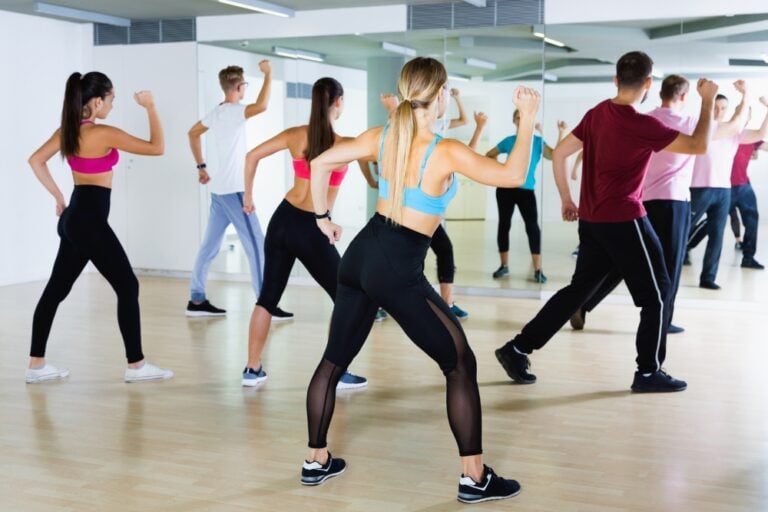
FlowFusion is the one where you never stop moving. You work through smooth, dance inspired sequences set to music, travelling through the hips, shoulders, spine and legs without settling into any single shape.
Because it’s continuous, you’re producing and controlling movement the whole time. That builds mobility that shows up in ordinary situations: getting out of the car, reaching a high shelf, turning far enough to reverse.
No dance background is needed. The movements are simple and guided, and they scale down easily. Of the three, this is the one that feels most like a workout while still leaving you energised rather than flattened.
Pick it if you want to feel looser day to day, you get bored lying still, or you want something that lifts your mood as much as your range.
Yin Yoga: Long Holds, Fully Supported
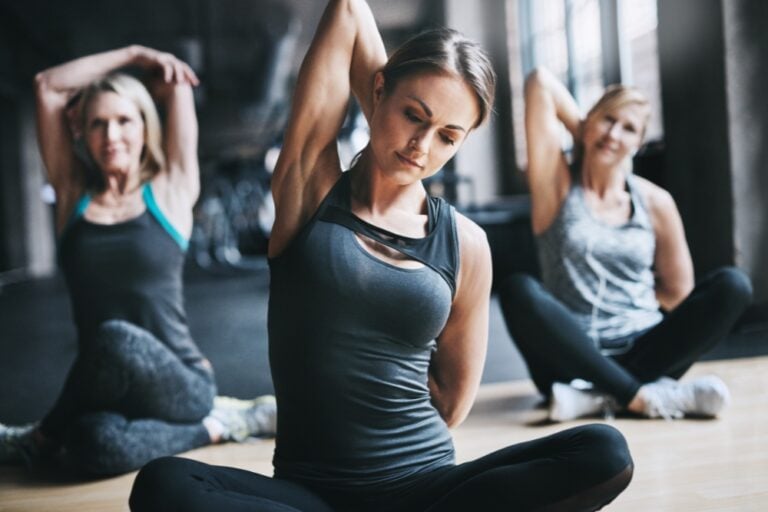
Yin Yoga is the slow one. You settle into a floor based shape and stay for two to five minutes, supported by bolsters and blocks so the muscles can switch off completely.
The first minute is the stretch. What happens after that is where the change comes from, and it targets the connective tissue around the joint rather than the muscle alone. That’s where a lot of long term stiffness lives.
It’s not always comfortable, and it’s harder than it sounds. Holding a hip opener for three minutes tests your patience more than your fitness. But nobody is watching, there’s no keeping up, and members well into their seventies do it alongside people who train hard six days a week.
Pick it if you’re chronically tight through the hips or lower back, you’re wound up and not sleeping well, or you train hard and need something that undoes some of it.
Zen Mat Pilates: Props, Release and Reset
Zen Mat Pilates uses foam rollers, massage balls and bolsters to work into the spots that ordinary stretching can’t reach. Hips, lower back, shoulders, spine.
The prop work is what makes it different. Rolling and releasing changes how a muscle responds before you stretch it, so you get into positions without forcing them. The class moves through grounding and breath work, then targeted release, then longer held positions to finish.
It’s the most restorative of the three and the easiest to walk into with an injury or a long gap since you last trained.
Pick it if you’re easing back into exercise, managing ongoing tightness, or you want an hour that leaves you settled rather than stimulated.
Side by Side
| FlowFusion | Yin Yoga | Zen Mat Pilates | |
| Pace | Continuous, music led | Still, very slow | Slow, guided |
| Time in one position | None, you keep moving | Two to five minutes | Short to moderate, prop supported |
| Props | None needed | Bolsters and blocks | Foam rollers, massage balls, bolsters |
| Main outcome | Mobility you can control | Deep tissue release | Tension release and recovery |
| How you leave | Energised, clear headed | Settled, loosened | Calm, lighter |
| Best entry point for | Everyday stiffness | Chronic tightness, stress | Injury, long layoff |
All three run at 58 Ferodale Road, Medowie, and all three are beginner friendly with props and modifications provided. The differences are in pace and purpose, not difficulty.
Choosing by Goal
If you want everyday mobility that transfers to normal life, start with FlowFusion.
If you want to release deep, stubborn tightness, start with Yin Yoga.
If you’re coming back from injury or a long break, start with Zen Mat Pilates. It’s also our usual first recommendation for anyone whose main goal is flexibility and recovery, because the release work plus controlled movement combination builds a range that lasts.
If you’re stressed and need your head to quieten down, Yin Yoga and FlowFusion both do it, by opposite routes. Yin settles you through stillness. FlowFusion settles you through rhythm. Pick based on whether being still calms you or drives you mad.
If you want core strength specifically, none of these three is the right pick. Our regular Mat Pilates class is the one built for that, and it’s a different class to Zen Mat Pilates despite the similar name.
Do You Have to Pick Just One?
No, and most regulars don’t. The three complement each other because they train different things.
A pattern that works well: FlowFusion midweek for mobility and a mental reset, Yin Yoga on Friday to undo the week. Add Zen Mat Pilates if you’re carrying something that needs more targeted attention.
Two low impact sessions a week alongside your other training is plenty for most people. Three if you’re using them as recovery around a heavy training load.
Come and Try One in Medowie
Class times for all three are on the group fitness timetable, and you can book through the MyClub Fitness app. Members come across from Raymond Terrace, Salt Ash and Karuah for them.
If you’re still not sure which one fits, call us on (02) 4003 4868 and tell us what you’re trying to sort out. We’ll point you at the right one rather than the busiest one.