
Hold a hamstring stretch for 30 seconds and you’ll feel looser straight after. That feeling is real. It also fades faster than most people expect, and it isn’t the same thing as becoming more flexible.
Here’s the short version of the dynamic vs static stretching question. Static stretching, where you hold a position and wait, is good at increasing how far a limb can be pushed. Continuous movement, where you travel through a full range under your own control, is better at building range you can use when you reach for something on a high shelf or twist to check a blind spot. Both have a place. If your goal is moving better day to day rather than pushing deeper into the splits, movement does more of the work.
That’s a more useful answer than the one you’ll find on most stretching articles, which tend to stop at “dynamic before, static after” and leave it there.
What a 30 Second Hold Does to Your Body
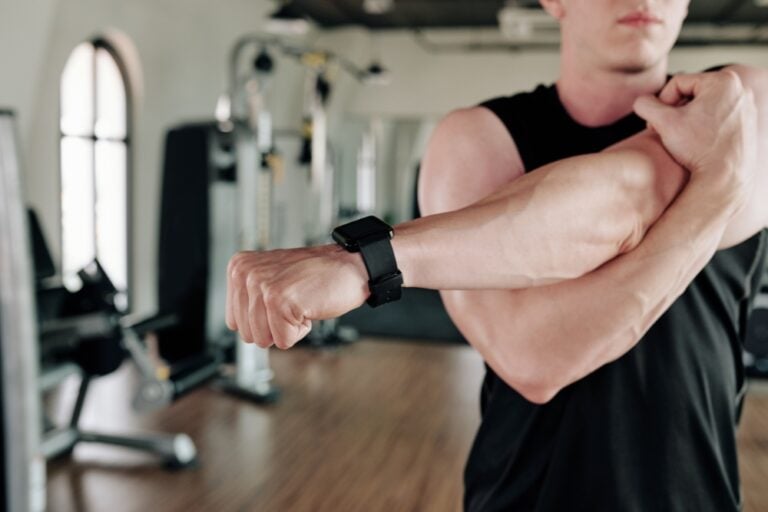
When you hold a stretch, two things change. Your muscle and tendon get slightly less stiff for a while, and your nervous system becomes more willing to let the joint travel that far.
The second part is the one that surprises people. A 2025 meta-analysis in Sports Medicine looked at what changes after weeks of static stretching and found the main adaptation was an increase in stretch tolerance. Participants could put up with more discomfort at the end of the range. Muscle fascicle length, the measure of whether the muscle fibres themselves got longer, didn’t change at all.
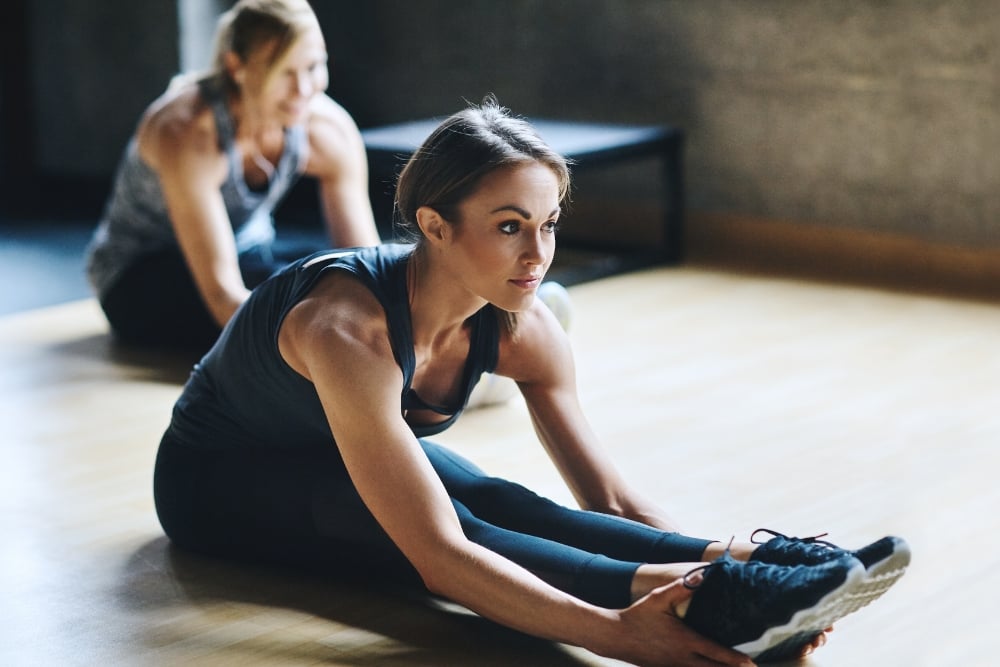
So the muscle isn’t growing any longer. You’re getting better at tolerating the position.
That’s not a criticism. Tolerating a deeper position is useful, and it’s the mechanism behind most flexibility gains anyone has ever made. It’s worth knowing what you’re training, because it explains the next part.
Why the Loose Feeling Disappears So Quickly
The 2016 systematic review by Behm and colleagues in Applied Physiology, Nutrition, and Metabolism pulled together the acute effects of every major stretching method. Every form of stretching improved range of motion. The improvements typically lasted less than 30 minutes.
Less than 30 minutes. You stretch after a session, drive home, and by the time you’re unpacking the car the measurable gain has gone.
The same review found something else worth knowing. Static stretching immediately before activity reduced performance by an average of 3.7 percent, while dynamic stretching improved it by 1.3 percent. The size of that penalty depended almost entirely on how long you held. Holds of 60 seconds or more per muscle group cost 4.6 percent. Holds under 60 seconds cost 1.1 percent, which is close to nothing.
That last detail matters, because it means the popular claim that static stretching ruins your workout is overstated. A normal 30 second hold sits well under the threshold where the penalty becomes meaningful.
What Continuous Movement Adds
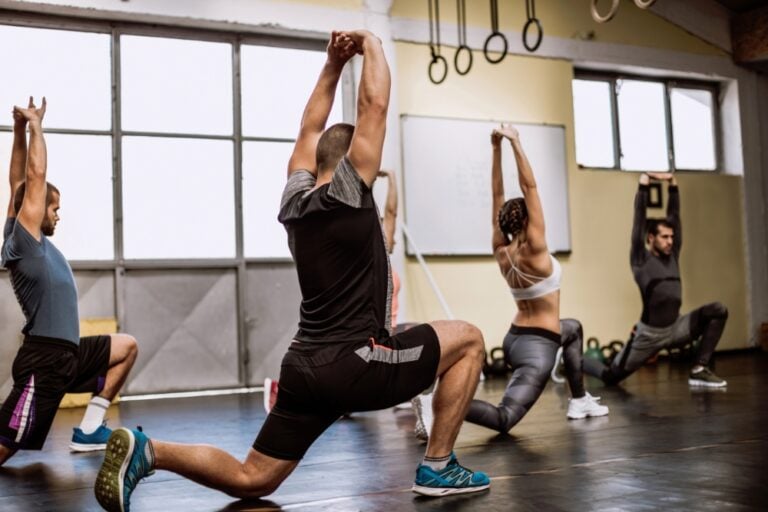
Moving through a full range is a different stimulus. You’re producing the movement rather than sinking into it, which means the muscles around the joint are working to control the position at the same time as they’re lengthening.
That control is what turns range into something usable, and it’s the practical difference between mobility and flexibility. A joint you can push into a position is not the same as a joint you can move into that position and hold steady while carrying a box of groceries.
There’s good evidence that movement through range is enough on its own. A 2021 review in Healthcare compared strength training against stretching for range of motion across eleven trials and 452 participants, and found no meaningful difference between them. Training a joint through its full range built the same flexibility that dedicated stretching did.
The practical upshot: you don’t have to choose between working out and working on flexibility. Done through a full range, movement is flexibility training.
Dynamic vs Static Stretching at a Glance
| Static stretching | Continuous movement | |
| What you do | Hold a position at end of range, 20 to 60 seconds | Travel repeatedly through a full range under your own control |
| Best for | Increasing how far a limb can be pushed | Warming up, and range you can control |
| Effect on performance straight after | Small reduction at normal hold lengths | Small improvement |
| Everyday mobility transfer | Indirect | Direct |
| When to use it | After training, or as its own session when warm | Before training, and as a session in its own right |
Where Static Stretching Still Wins
Being straight about this matters. If the goal is the biggest possible increase in passive range, static stretching beats flowing movement. A 2023 meta-analysis in the Journal of Sport and Health Science compared stretching methods over weeks of training and found static stretching and PNF produced greater range of motion gains than dynamic or ballistic work.
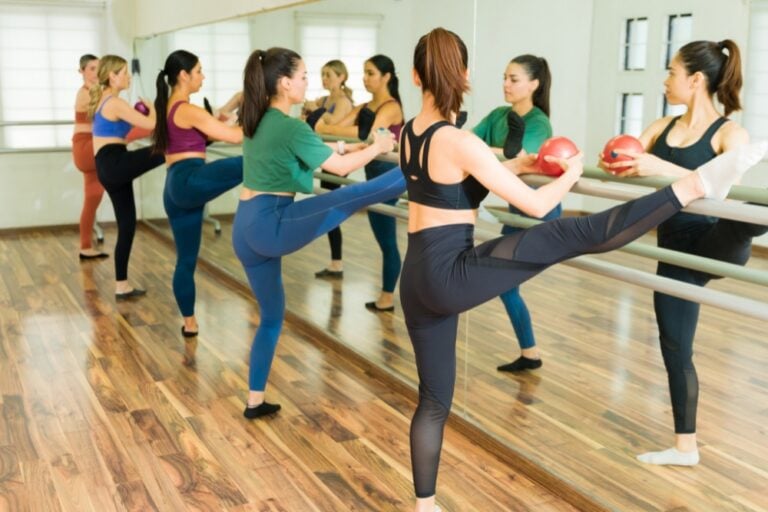
So if you want to sit in a full straddle or drop into a deep squat, hold the positions. That’s the tool for that job, and anyone telling you otherwise is selling something. Our Zen Mat Pilates class is built around exactly that kind of held, breath-led work.
The reason we still recommend movement first for most members is that hardly anyone walks in wanting a straddle. They want to get off the floor without using their hands, sleep without a nagging shoulder, and turn their head far enough to reverse the car.
The Measure That Matters for Most People
Australia’s 24-hour movement guidelines now list functional activities targeting mobility, balance and coordination as their own recommendation, alongside cardio and muscle strengthening, at three or more days per week. Mobility got its own line because moving well through range is a health outcome in its own right, not a stretching afterthought.
Three days a week is achievable. It doesn’t mean three separate mobility sessions. A class built around continuous movement covers it, and so does a strength session performed through the full range rather than half of it.
How Continuous Movement Works in a FlowFusion Class
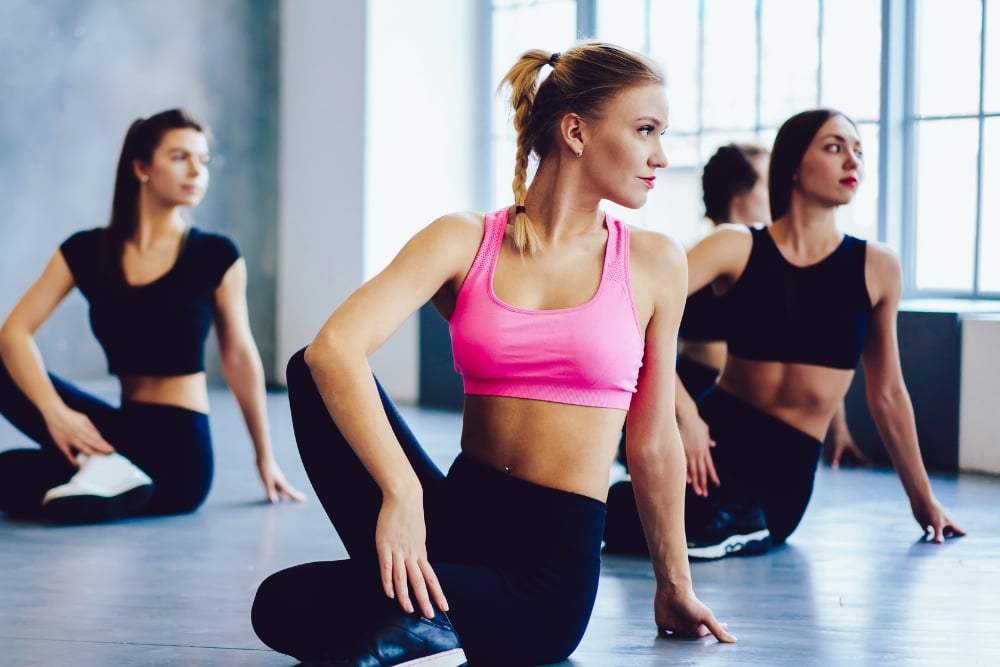
FlowFusion at our Medowie gym is built on this idea. Rather than holding poses, you move continuously through smooth sequences set to music, working the hips, shoulders, spine and legs through ranges they don’t usually see during a week of sitting.
Because it’s continuous, you’re spending 45 minutes producing and controlling movement rather than waiting out a series of holds. No dance experience is needed and the movements can be scaled, which is why it suits people coming back after a long break as readily as it suits regulars.
Members travel in from Raymond Terrace, Salt Ash and Karuah for it, and the pattern we see is consistent. The change shows up between classes rather than during them: getting out of the car, reaching the top shelf, a lower back that stops complaining by midweek.
Building Both Into Your Week
A sensible structure looks like this. Move continuously to warm up, before anything demanding. Train through a full range rather than a partial one, which handles most of your flexibility work without adding time. Add one or two continuous movement sessions across the week for mobility that transfers to daily life. Then, if you have a specific range you want to open up, hold that stretch two or three times a week when you’re already warm.
Nothing there requires choosing a side. The mistake isn’t picking static over dynamic. It’s assuming the 30 second hold at the end of a session is doing the whole job on its own.
Come and Try It in Medowie
FlowFusion runs on the group fitness timetable at 58 Ferodale Road, Medowie. If you’re not sure whether it’s the right fit alongside your current training, call us on (02) 4003 4868 and we’ll talk it through.