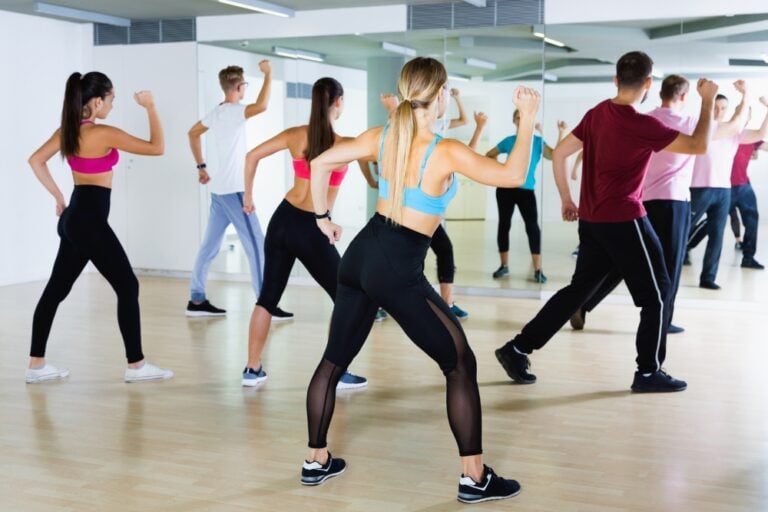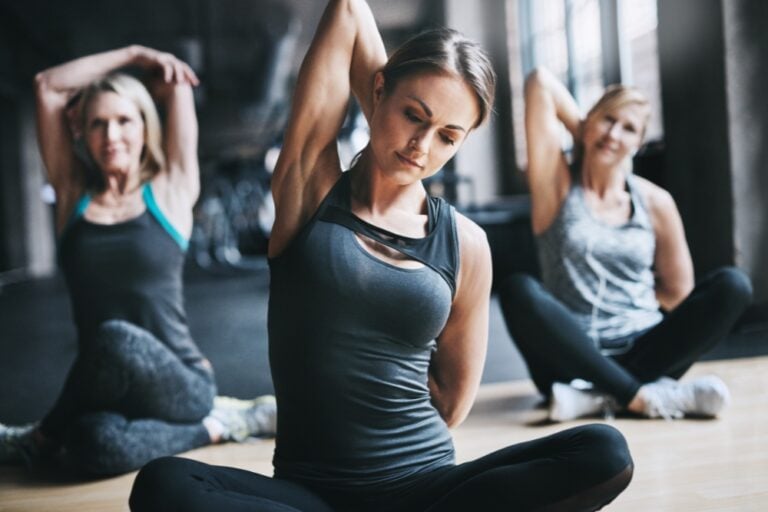

Active recovery means moving on your easy days rather than doing nothing at all, and restorative stretching is one of the most useful forms it takes. It’s a session with its own purpose, not five minutes bolted onto the end of a hard workout. Most people training three or four times a week in Medowie give it no room at all, then wonder why their hips feel like concrete by Friday.
Here’s what it does, what it doesn’t do, and where it fits in your week.
Active Recovery Is Not a Rest Day, and It’s Not a Light Workout
A rest day is rest. You sleep in, you stay off your feet, your body gets on with repairing itself. Nothing wrong with that.
Active recovery sits between rest and training. You’re moving, but at an intensity that adds nothing to the load you’ve already put through your body. Blood keeps circulating through tired tissue. Joints travel through ranges they never see when you’re at a desk or on the lounge. You leave feeling looser than when you walked in.
The trap is treating a recovery day as a slightly easier training day. Twenty minutes on the treadmill at a steady pace is a workout. It’s a good workout, but it isn’t recovery. If your breathing has changed and you’re counting down the minutes, you’ve picked the wrong session.
Restorative Stretching Versus the Two Minutes at the End of Class
Most gym stretching is an afterthought. The class finishes, the instructor calls a hamstring stretch, you hold it for fifteen seconds while chatting to the person next to you, and you’re out the door.
Restorative stretching works on a different timescale. Holds run long enough for your nervous system to stop guarding the position, which is where the change happens. Props do the supporting so your muscles don’t have to. Breathing is part of the method rather than background noise.
That last point gets written off as fluff. It isn’t. Holding a deep stretch while breathing shallowly keeps you braced against the position, and a braced muscle doesn’t lengthen. Slow breathing is what lets it.
What Stretching Does, and One Thing It Doesn’t
Here’s where honesty beats marketing.
A Cochrane review pooling twelve randomised trials found that stretching before or after exercise doesn’t produce a clinically worthwhile reduction in delayed onset muscle soreness. If someone tells you a stretch session will fix the ache two days after a heavy leg workout, the research doesn’t back them up.
So why bother?
Because soreness was never the point. Restorative work earns its place through a range of motion you can use, through joints that move freely first thing in the morning, and through unwinding the tension that builds in hips, lower back and shoulders across a week of training and sitting. It also gives you an hour where your nervous system gets to downshift, which matters more than most training plans admit.
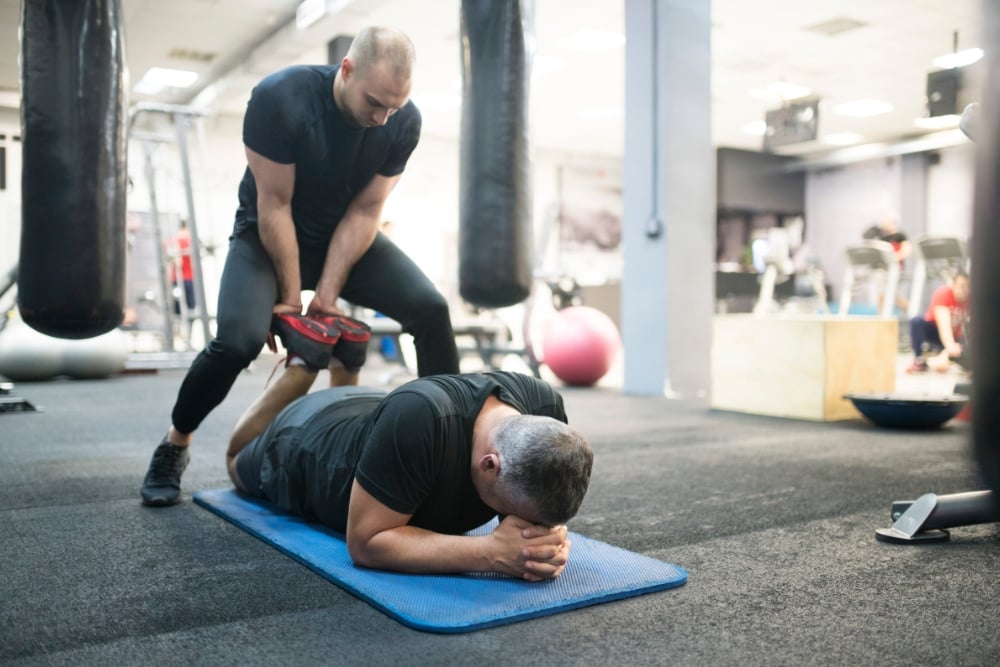
Set the right expectation and the session delivers. Expect it to erase soreness and you’ll be let down.
Where Active Recovery Fits in a Hard Training Week
The Australian Government guidelines for adults aged 18 to 64 recommend 2.5 to 5 hours of moderate activity or 1.25 to 2.5 hours of vigorous activity each week, plus muscle strengthening on at least two days. Anyone doing boxing, circuit or pump classes a few times a week is sitting comfortably inside that range, often well above it.
That’s the group who benefit most from a restorative session. They’re also the ones who skip it.
A workable week looks like this. Two or three hard sessions with a day between them. One restorative session, ideally the day after your heaviest effort. Everything else is walking, gardening, chasing kids around the yard. The restorative session isn’t a reward for finishing the hard work. It’s part of what lets you keep doing the hard work in six months’ time.
If you’re training twice a week, you probably don’t need a dedicated recovery class yet. If you’re training four or five times, you’re overdue.
What a Zen Mat Pilates Session Involves
Zen Mat Pilates is the restorative end of the timetable at Active Fitness Medowie. It’s floor based, low impact, and built around deep stretching, guided breathing and targeted muscle release.
Sessions use foam rollers, massage balls and bolsters. The props matter more than they look. A bolster under your knees turns a hip opener from something you brace against into something you can settle into for two minutes. Massage balls reach tissue around the glutes and shoulders that a held stretch can’t get near.
The class works through the areas that seize up on people who train hard: hips, lower back, shoulders and the spine. Instructors talk through each position and offer options, so you take the version your body’s up for on the day.
It suits people easing back in after injury, people managing ongoing tightness, and people who train hard and need somewhere to put the other half of the equation. If you have done a standard mat class before, the differences between Zen Mat Pilates and regular Mat Pilates are worth a read first.
Zen Mat Pilates or Stretch-N-Flex
Two classes, two different jobs.
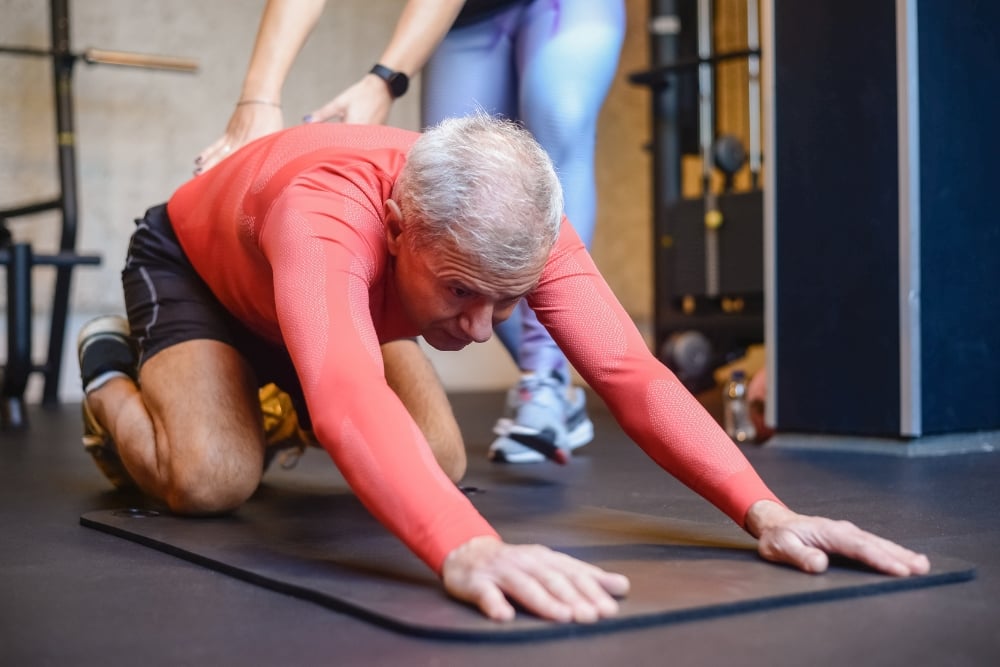
Stretch-N-Flex is a stretch class and that’s the whole point of it. Held positions, guided the whole way through, working the hips, hamstrings, shoulders, lower back and neck. Blocks, straps and wall support are there if you need them. It runs Monday 11.30am, Thursday 11.30am and Thursday 5pm.
Zen Mat Pilates brings Pilates movement, patterns and prop assisted release alongside the stretching, with more weight on breath work and on the mental side of the hour.
Pick Stretch-N-Flex if range of motion is the goal. Pick Zen Mat Pilates if you want the release work and the reset as well. Plenty of members do both.
Making It Stick
Book it like a class, not like a nice idea.
The recovery session is the first thing people drop when the week gets busy, because it doesn’t feel like it counts for anything. Put it in the app, treat it the same as your Tuesday circuit, and it survives the week.
Two other things help. Go the day after your hardest session, while your body is asking for it. And give it six weeks before you judge it, because the changes turn up quietly. Reaching behind you in the car. Getting up off the floor without pushing off a chair. Sleeping through the night without a shoulder waking you. Pair it with enough sleep for proper recovery and the results come faster.
Try Active Recovery in Medowie
We’re at 58 Ferodale Road, Medowie, and members come across from Raymond Terrace, Salt Ash and Lemon Tree Passage for the group fitness timetable. Zen Mat Pilates and Stretch-N-Flex are both on it, and you can view and book your spot through the MyClub Fitness app.
Not sure which one suits you? Call us on (02) 4003 4868 and we’ll point you in the right direction.