
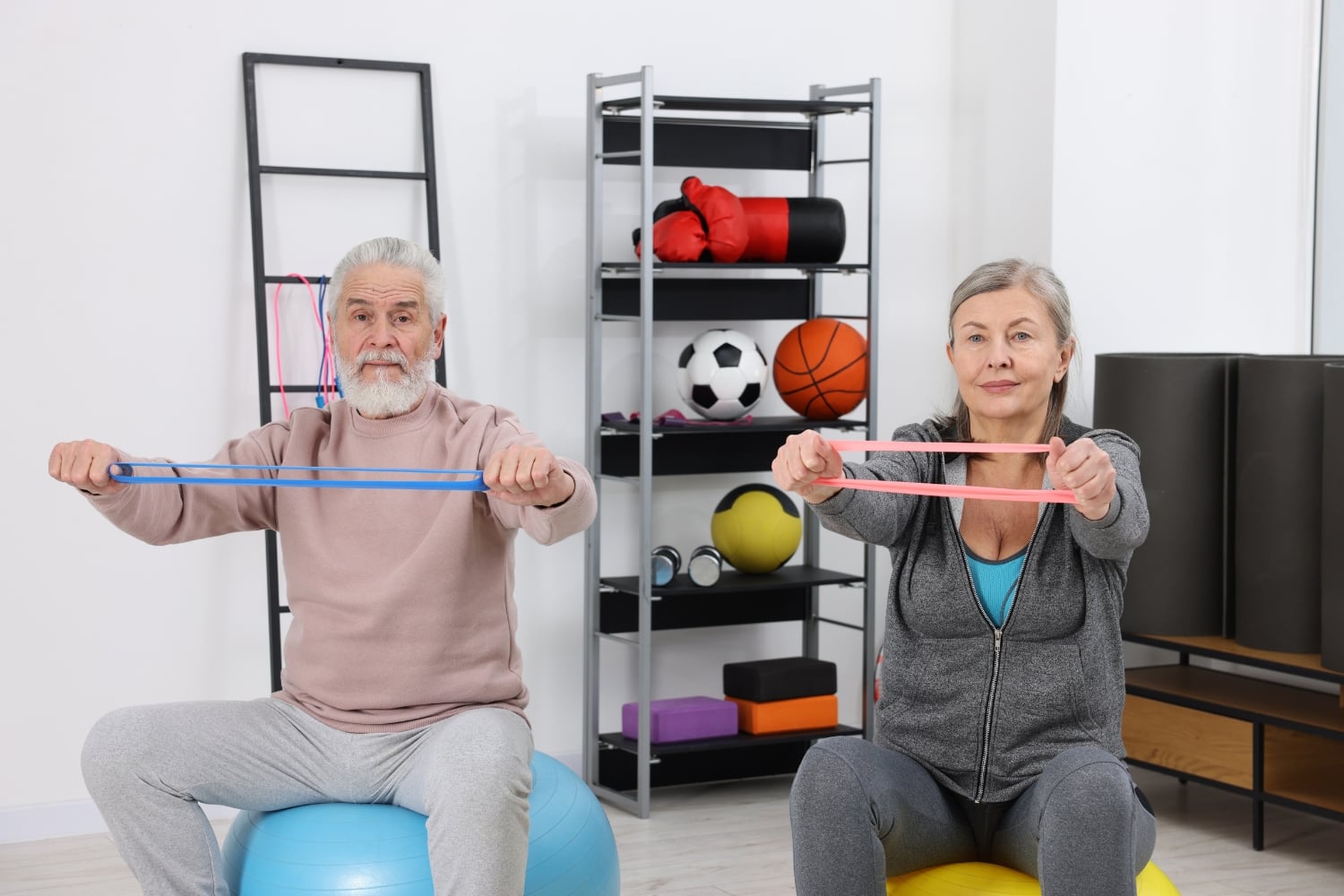
Exercise is one of the most evidence-supported tools for managing Parkinson’s disease. It works by encouraging neuroplasticity, which is the brain’s ability to form new pathways to control movement when existing ones are disrupted.
If you or someone you care about has been diagnosed with Parkinson’s, understanding which types of exercise help, why they work, and how to do them safely is a practical starting point.
Why Exercise Matters for Parkinson’s
Parkinson’s disease reduces dopamine production in the brain, which affects movement, coordination, and balance. Exercise, particularly at moderate to higher intensities, has been shown in clinical research to support dopamine processing and may help slow the progression of motor symptoms.
The Parkinson’s Foundation and peer-reviewed research published in journals such as npj Parkinson’s Disease have highlighted forced and intensive exercise as a meaningful intervention, though it is not a substitute for medical treatment.
The goal is not peak athletic performance. It is maintaining independence, reducing fall risk, and keeping neural pathways active.
1. High Intensity Capacity Training
This is not extreme training. It means working at a level that raises your heart rate noticeably, which research suggests may help the brain process dopamine more effectively.
In practice, this could be a brisk walk where conversation becomes a little harder, or cycling on a stationary bike at around 80 RPM, even on low resistance. The key is sustained effort rather than maximum exertion.
This type of training should be built up gradually and cleared with your medical team before you begin, particularly if balance or cardiovascular health is a factor.
2. Big and Loud Movements
Parkinson’s has a well-documented effect of making movements smaller over time. Steps shorten, arm swing reduces, and handwriting shrinks. Training that deliberately exaggerates movement amplitude counters this tendency.
Exercises in this category include large arm swings, high knee steps, and wide reaching movements. The aim is to recalibrate your internal sense of movement size, because what feels exaggerated to you may actually be closer to a normal range of motion.
Programs built around this principle, such as LSVT BIG (developed by Lee Silverman Voice Treatment Foundation), use exactly this approach and are specifically designed for Parkinson’s.
3. Balance and Agility
Falls are the most immediate safety concern for people with Parkinson’s. Straightforward balance exercises are useful, but the most functional training involves dual tasking, doing two things at once, because that is how everyday life works.
Examples include walking in a straight line while catching a ball, stepping over low obstacles while answering a simple question, or turning and reaching while keeping your footing. These replicate the real demands of navigating everyday environments, such as a busy supermarket aisle or uneven footpath.
Understanding mobility vs flexibility training is useful here, because the goal is not just stretching muscles but building the active control needed to move safely in unpredictable situations.
Use a wall or sturdy chair for support whenever needed. There is no ego in this.
4. Strength Training
Muscle strength protects joints, supports bone density, and is essential for maintaining an upright posture. For Parkinson’s, the focus is on postural muscles: the back extensors, glutes, and core, which are the muscle groups that counteract the stooped gait and forward lean that can develop over time.
The importance of core strength is especially relevant for people with Parkinson’s, where postural control underpins safe movement in every other activity.
Resistance training does not need to be heavy. Bodyweight exercises, resistance bands, and light weights performed with control are all appropriate starting points.
How Often Should People With Parkinson’s Exercise?
General guidance from organisations such as the Parkinson’s Foundation recommends aiming for activity across most days of the week, combining cardio, balance, and strength work rather than focusing on one type alone. A common structure is:
| Training Type | Suggested Frequency | Example |
|---|---|---|
| Higher-intensity cardio | 2 to 3 sessions per week | Brisk walking, stationary cycling |
| Balance and agility | 2 to 3 sessions per week | Dual-task drills, stepping exercises |
| Strength training | 2 sessions per week | Resistance bands, bodyweight exercises |
| Mobility and flexibility | Daily or most days | Gentle stretching, movement warm-ups |
The right frequency depends on your current stage, symptoms, and what your medical team recommends. Timing sessions for when your medication is working at its most effective will help you get more out of each session.
Safety Considerations Before You Start
Starting or changing an exercise program with Parkinson’s involves a few sensible steps:
- Speak with your neurologist or GP first. They can advise on intensity limits, flag any cardiovascular considerations, and confirm whether physiotherapy is appropriate before you join group exercise.
- Time your sessions with your medication. Exercise during your medication’s peak effectiveness window will generally feel safer and more productive.
- Use support when needed. A wall, sturdy chair, or exercise rail is not a concession. It is good practice.
- Start with supervised sessions. A qualified instructor familiar with Parkinson’s can adjust exercises in real time to match your capacity on any given day.
- Prioritise consistency over intensity. Regular moderate activity is more sustainable and beneficial than occasional hard sessions with long gaps.
Why Exercising in a Group Helps
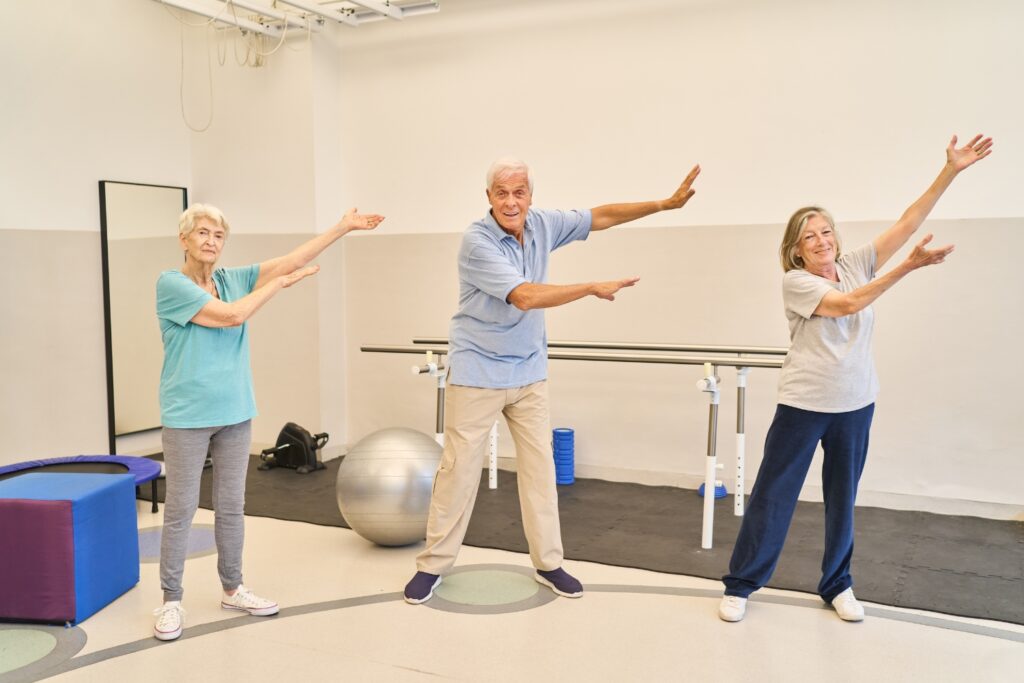
Parkinson’s can feel isolating. Exercising alongside other people in an environment where a tremor or a moment of freezing is understood, not noticed, makes a meaningful difference to how you feel about showing up consistently.
Group classes also provide structure, social connection, and accountability, all of which support long-term adherence. That matters, because the benefits of exercise for Parkinson’s are cumulative and depend on showing up regularly over time.
At Active Fitness Medowie, the Mobility Training classes run every Thursday at 12:30pm for one hour and are a practical starting point for anyone managing Parkinson’s or working on movement and balance. The full range of classes includes options that suit different needs and ability levels.
Frequently Asked Questions
How often should someone with Parkinson’s exercise each week?
Aim for regular activity across the week, combining higher-intensity cardio, balance work, and strength training. The table above gives a practical starting structure. Check with your doctor or physiotherapist about the right amount for your stage, and time your sessions for when your medication is working best.
Is high intensity exercise safe with Parkinson’s?
For many people, moderately harder cardio is beneficial and encouraged, but intensity should be built up gradually and cleared with your medical team first, especially if balance or heart health is a concern. “High intensity” in this context means noticeably elevated effort, not maximal exertion.
What exercise helps most with balance and falls?
Dual-task balance and agility drills, such as walking while catching a ball or stepping over obstacles, mimic real-life demands and help reduce fall risk. Use a wall or sturdy chair for support when needed, and consider starting these drills in a supervised setting before doing them independently.
Can strength training make Parkinson’s symptoms worse?
There is no evidence that appropriate strength training worsens Parkinson’s symptoms. Performed with control and at a suitable load, it supports the postural muscles that help maintain upright movement. Sudden, heavy, or poorly supervised loading would not be appropriate for anyone at any level.
What if I have a bad day and symptoms are worse than usual?
Parkinson’s symptoms fluctuate. On days when tremor, stiffness, or fatigue are higher, it is reasonable to reduce intensity, shorten the session, or focus on gentle mobility work rather than skipping exercise entirely. A consistent, adaptable routine tends to serve people better than an all-or-nothing approach.
The best exercise for Parkinson’s is the kind you do consistently. Whether that is a purposeful walk around Medowie, a Thursday mobility class, or a strength session with a qualified trainer, the point is to keep those neural pathways active and to build a routine that feels manageable enough to sustain.
If you want to talk about the right starting point, the team at Active Fitness Medowie is available to help.