
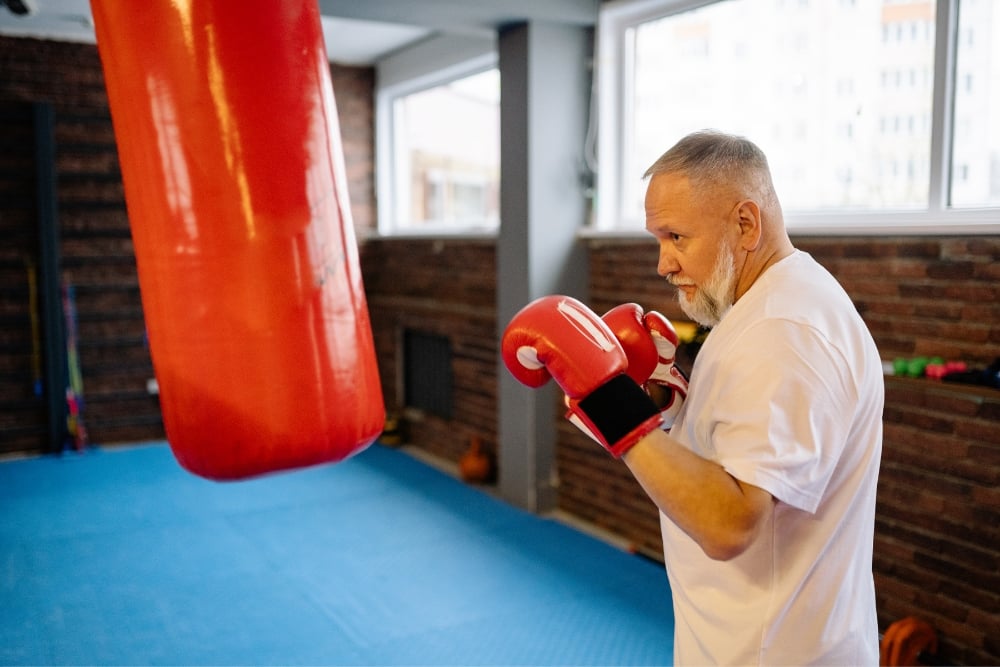
Most people walk into a boxing class for the physical stuff. They want to get fitter, drop some weight, try something different. That’s a completely reasonable reason to show up.
But a lot of people keep coming back for something else entirely.
Ask anyone who’s been training consistently for a few months and they’ll tell you. The thing that surprised them wasn’t what happened to their body. It was what happened in their head.
What’s Actually Going on When You Train
When you hit a bag -really hit it, with intention, working through combinations -your brain goes into a very focused state. You’re not thinking about the argument you had this morning, or the thing you forgot to do at work, or whatever’s been sitting at the back of your mind for the past three days. You’re thinking about where your hands are and what’s coming next.
That’s not an accident. It’s one of the reasons boxing has started showing up in conversations about mental health more.
Research out of several Australian universities over the past decade has pointed to high-intensity exercise -particularly the kind that requires technical focus -as genuinely effective for reducing symptoms of anxiety and depression. Not as a replacement for professional support, but as a meaningful complement to it. The combination of physical exertion, rhythmic movement, and the need to concentrate on technique seems to hit something in the nervous system that a walk on the treadmill, as useful as that is, doesn’t quite reach in the same way.
The Stress Response and What Boxing Does to It
When you’re stressed or anxious, your body is in a state of readiness. Cortisol is up. Your nervous system is primed. Historically, that state was designed to help you run from something or fight it.
The problem is that most modern stress doesn’t come with a physical outlet. You sit at a desk, or drive in traffic, or have a difficult phone call, and all that physiological activation just… sits there.
Boxing gives your body something to do with it.
The physical intensity of a bag session burns through the stress hormones that have built up. By the time you’re cooling down, your nervous system has had the outlet it was looking for. That’s why people often describe walking out of a boxing class feeling calmer than when they walked in -even though they’ve just worked harder than they have all week.
It’s Not Just the Workout – It’s the Structure
There’s something else going on in a group boxing class that’s worth naming.
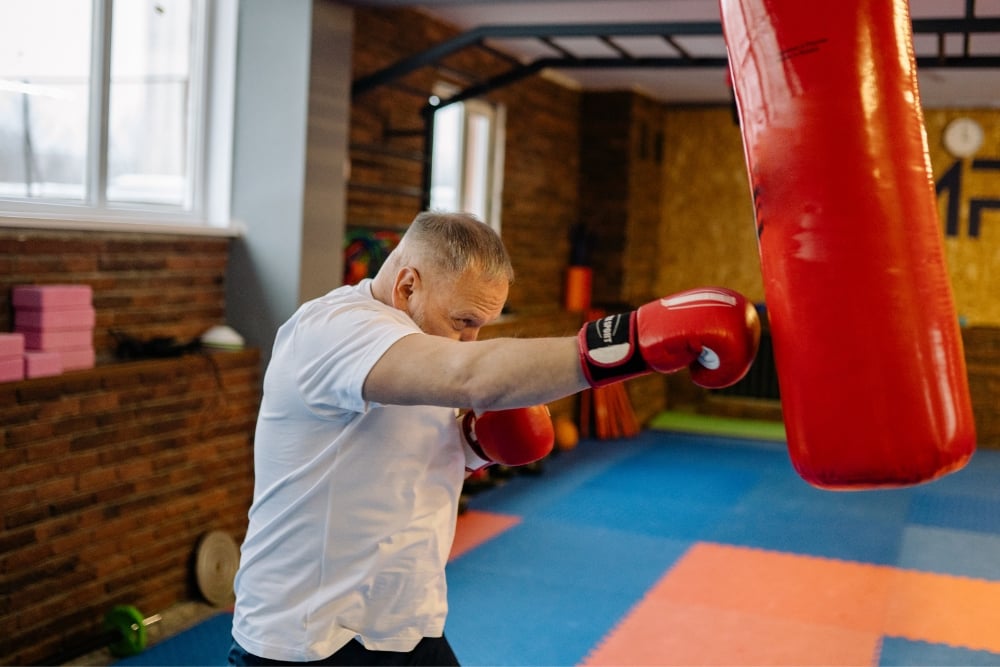
Learning a skill takes a certain kind of focus. A jab-cross-hook combination isn’t complicated, but it takes real attention to get it right -the hip rotation, the guard position, the timing. When you’re working on technique, you’re not mentally elsewhere. You’re present.
That enforced presence is part of why people who struggle with anxious or circular thinking often find boxing particularly useful. Your mind genuinely can’t wander during pad work or a bag round. There’s no space for it.
Over time, that practice of being present -of pulling your attention back to what you’re doing right now -starts to carry over into other parts of life. That’s not a stretch. It’s consistent with what exercise researchers call the “transient hypo frontality” effect -basically, high-intensity exercise temporarily reduces activity in the parts of the brain responsible for overthinking and rumination. The effect is temporary during the session, but regular training builds a pattern.
The Community Part Matters Too
Regional Australia has a loneliness problem. It’s talked about less than the mental health stats, but the two are connected.
A lot of people in places like Medowie, Raymond Terrace, and across Port Stephens are living busy, isolated lives. Work, family, logistics -there’s not a lot of leftover time for genuine social connection, and gyms are often a solo experience.
A group boxing class is different. There’s something about training together -being in the same room, working through the same discomfort, cheering each other on through the last thirty seconds of a round -that builds connection quickly. People who’ve been training together for a few months will tell you they look forward to the class partly because of who’s in it.
That’s not a minor thing. Social connection is one of the most consistent protective factors in mental health research. If a boxing class is what brings it about, that’s worth acknowledging.
Who This Is Actually For
If you’re picturing a boxing class as something for fit, intimidating people who already know what they’re doing -that’s not what our Box Fit class looks like.

The people in it on any given day include parents who haven’t exercised in years, people working through a tough patch, blokes who don’t usually do group fitness but found this less confronting than they expected, women who came for the fitness and stayed for the stress relief, and yes, some people who are just really good at it by now.
All fitness levels. All ages. No sparring, no contact. Just you, the bag, a good instructor, and a room full of people in the same boat.
If you’ve been feeling flat, anxious, or just in need of something that genuinely shifts your mood -this is worth trying. Not as a fix for everything, but as something real you can do a few times a week that will make a difference to how you feel.
If You’re Doing It Tough
Exercise is genuinely helpful, but it’s not the whole picture. If you’re struggling with your mental health, please reach out to someone -your GP, a counsellor, or a support line.
Beyond Blue: 1300 22 4636
Lifeline: 13 11 14
Looking after yourself physically is a good starting point. Just don’t let it be the only step.
Our Box Fit class runs as part of the group fitness timetable at Active Fitness Medowie. It’s included in your standard membership -no extras, no sign-up fees.
Check the timetable or get in touch if you want to know more before you come in.