Stress doesn’t always show up as tension headaches or sleepless nights. Sometimes it’s the low-level background hum that makes everything feel a bit harder than it should. You know the feeling.
Exercise helps. Most people know that. But not all exercise helps in the same way, and if you’re already running on empty, a high-intensity session can leave you more depleted than when you started.
Pilates works differently. Here’s why it’s one of the best things you can do when life is getting on top of you.
1. It Forces You to Slow Down and Breathe
Breathing is built into every Pilates exercise. It’s not an afterthought or a warmup cue, it’s the foundation of how the movements work. You inhale to prepare, exhale to engage, and every transition is anchored to breath.
This matters because controlled, deliberate breathing directly activates the parasympathetic nervous system, the part of your body that tells your stress response to stand down. Your heart rate drops. Muscle tension releases. The mental noise quietens.
It happens almost without you noticing. By the time you’re twenty minutes into a class, your body has already started to shift gears.
2. The Focus Required Gives Your Mind a Break
Pilates movements look deceptively simple. A leg circle, a roll-up, a single-leg stretch. But each one requires you to think about where your spine is, what your core is doing, whether your shoulders have crept up around your ears again.
That level of concentration is incompatible with replaying work emails in your head. Your brain can’t hold the technique and the mental chatter at the same time.
This is sometimes called active meditation. You’re not sitting still trying to clear your thoughts. You’re doing something physical that naturally occupies your attention and gives your stress response nowhere to go.
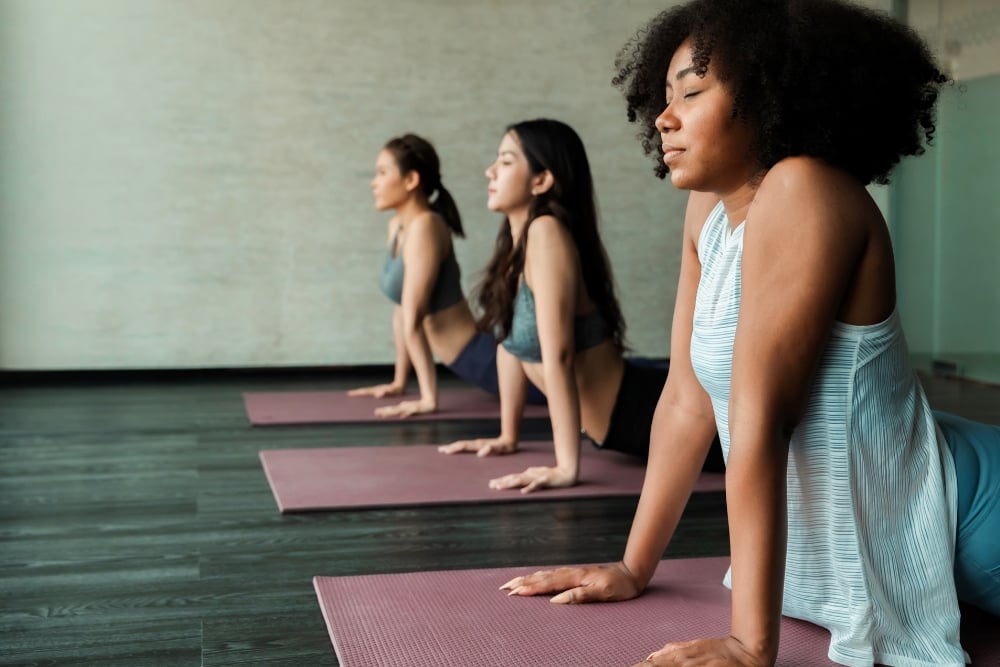
3. It Targets the Places Stress Lives in Your Body
Stress tends to pool in predictable places: the neck and upper back, the jaw, the hips, the lower back. These are the areas that tighten when you’re under pressure and stay tight long after the pressure passes.
Pilates specifically works through the spine, hips, and deep core in ways that release exactly that kind of held tension. The spinal articulation exercises alone (rolling through the vertebrae one at a time) can undo hours of sitting hunched at a desk.
It’s not just stretching. The combination of controlled strengthening and lengthening through a full range of motion is what makes Pilates effective at releasing tension that other workouts don’t reach.
4. It Builds Strength Without Adding to Your Stress Load
High-intensity training puts the body under physical stress to build fitness. That’s not a criticism. It works. But if your cortisol levels are already elevated from everyday life, adding more physical stress on top can sometimes make things worse before they get better.
Pilates builds genuine strength. The plank holds, the leg presses, the oblique work are all real. But the intensity is steady and manageable rather than spiking. Your nervous system stays calm throughout, which means you finish class feeling built up rather than broken down.
That shift in how you feel after a session is one of the things people notice first. You’re tired in a good way.
5. The Results Improve How You Handle Stress Day to Day
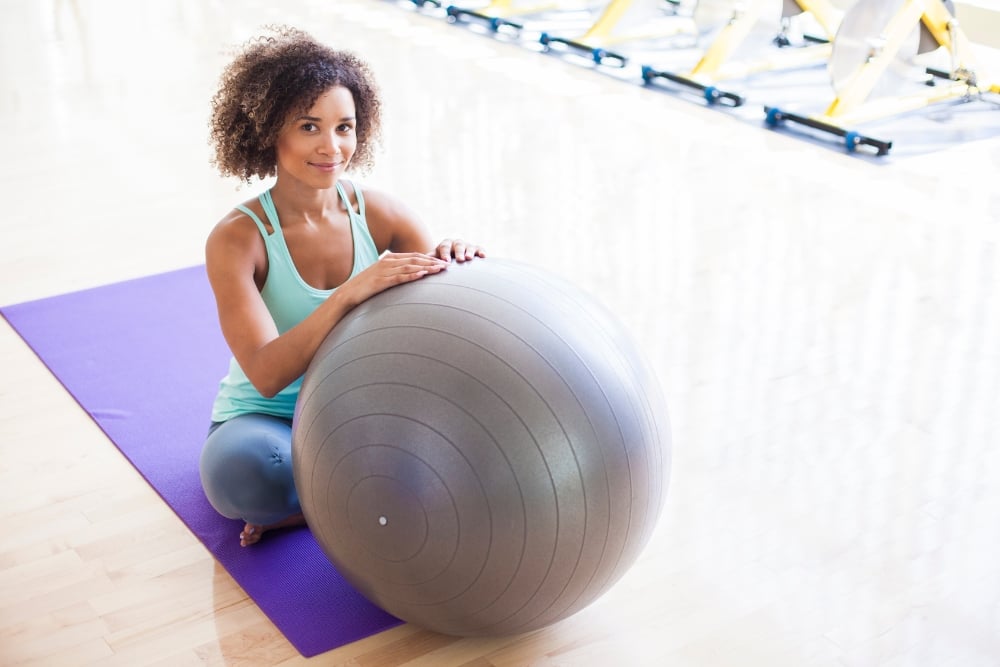
Better posture means less physical tension accumulating through the day. A stronger core means your body isn’t working as hard to hold you upright at your desk. Improved body awareness means you notice when you’re starting to tense up and can do something about it earlier.
These aren’t just fitness outcomes. They change the baseline from which you face stress. When your body is stronger and more at ease in itself, everyday pressure sits differently.
Regular Pilates practice tends to build this kind of resilience gradually. It’s not a single session fix. But within a few weeks, most people notice they’re sleeping better, moving more easily, and feeling less reactive to the things that used to tip them over.
Which Pilates Class Is Right for You?
At Active Fitness Medowie, we run two Pilates options. Mat Pilates is a structured group class that builds core strength, flexibility, and body awareness through mat-based exercises. It’s suitable for all fitness levels, including beginners.
Zen Mat Pilates takes a slower, more meditative approach, combining Pilates movements with breathing and mindfulness cues. If stress and mental recovery are your main reasons for coming, this one is worth trying first.
Both classes are on the group fitness timetable. You can check current session times and drop-in options online.
Ready to Give It a Go?
If you’ve been thinking about trying Pilates but haven’t made the move yet, this is a good time. Get in touch with us and we’ll help you find the right class and time to get started. No experience needed.